
 |
| Coming up: The new king of Belgium makes an appearance on the royal palace balcony |
Crown Prince Philippe has been sworn in as king of the Belgians after the emotional abdication of his father Albert II.
The Oxford- and Stanford-educated, trained air force pilot took the oath as the country's seventh king in a ceremony in parliament.
To warm applause, King Philippe, 53, promised to uphold the constitution.
Belgium has a constitutional monarchy in which the king plays a largely ceremonial role.
One of the duties the monarch does have is trying to resolve constitutional crises.
Constitutional crises
In a colourful ceremony topped off by trumpet fanfare and cannon-fire, Philippe took his oath in the country's three official languages - Dutch, French and German.
In his final address before signing a legislative act to step down on Sunday, 79-year-old Albert said his country must remain a "source of inspiration" to Europe.
Continue reading the main story Albert II hugged his son before signing the abdication treaty at the palace in Brussels
He had earlier urged Belgians to give son their support, saying he was no longer well enough to carry on.
Albert also stressed his wish that Belgium - split between the Dutch-speaking north and the French south - remained united.
His resignation after nearly 20 years on the throne comes on Belgium's national day.
In an emotional ceremony at the royal palace in Brussels, the former monarch told his son: "You have all the emotional and intellectual qualities to serve our country well."
He thanked an audience of some 250 dignitaries and political leaders "for all that you have achieved during my reign".
Albert also thanked his wife, Paola, for the support she had given him during his reign, and was in turn thanked by Prime Minister Elio Di Rupo for his service to his country.
Mr Di Rupo holds the political power in the 183-year-old parliamentary democracy.
Albert then embraced his son and signed the official abdication papers, ending his reign.
King Albert exercised his authority in mediating between political leaders on the formation of a government during the 2010-2011 parliamentary stalemate, when Belgium was left without a government for 541 days after elections failed to find a clear winner.
Tensions between the Dutch-speaking and French communities sometimes run high, and the issue has brought down several governments, creating frequent political instability.
Respect for the royal family, though, is one of the few factors that crosses the communal divide.
King Albert's abdication comes only three months after Queen Beatrix of the neighbouring Netherlands vacated the Dutch throne in favour of her son Willem-Alexander.
 |
| Rupert Wingfield-Hayes says Mr Abe's party is seeking major reforms |
Voters in Japan are casting ballots in upper house elections expected to deliver a win for PM Shinzo Abe.
Half of the 242 seats in the chamber are being contested.
Polls show Mr Abe's Liberal Democratic Party (LDP) and its allies could secure a majority, meaning a ruling party would control both houses of parliament for the first time in six years.
The deadlock in parliament has been seen as a key factor in Japan's recent "revolving door" of prime ministers.
Polling stations opened at 07:00 (22:00 GMT Saturday) and will close at 20:00 (11:00 GMT).
Despite the importance of the election, early turnout was a little down from the last upper house poll in 2010.
Japan's upper chamber, while not as powerful as its lower house, is able to block legislation introduced by the government.
No single party has a majority, although the opposition Democratic Party of Japan has the highest number of seats.
Opposition parties have had enough combined seats to control the upper chamber in recent years, leading to what has become known as a "twisted parliament".
This has resulted in factionalism and multiple changes of prime minister.
"We need political stability to carry out policies," Mr Abe said ahead of the vote. "We will get that political stability by winning the upper house election."
Mr Abe, 58, has relatively strong public support for his proposals for economic reform known as "Abenomics", which seek to revive the economy, stagnant for two decades.
Since his coalition government came to power, the economy has grown by 4% and the stock market by more than 40%.
His first two measures involved a big injection of cash by the Bank of Japan and a major boost in government spending.
But he now faces the task of driving through difficult structural changes to the economy.
Trade barriers need to come down, taxes will need to rise and large parts of the economy will have to be deregulated, the BBC's Rupert Wingfield-Hayes reports from Tokyo.
One of the decisions he will have to make later this year is whether to raise sales tax next April from 5% to 8% to help reduce Japan's national debt.
Mr Abe is also considering whether to cut Japan's 36% corporate tax to spur growth and open up the power industry, currently controlled by regional monopolies.
And his government is keen to join a free trade agreement known as the Trans-Pacific Partnership (TPP), being negotiated by 11 countries.
'Stable government'
``I want them to carry on doing their best as the economy seems to be picking up,'' one voter, Naohisa Hayashi, 35, told the Associated Press.
"I want to see a stable government. That's the Liberal Democratic Party," 76-year-old Hiroshi Miyamoto was quoted by Reuters news agency as saying, after voting in the western Tokyo suburb of Hachioji.
Mr Abe is also thought likely to endorse several controversial policies beyond the economy.
One is restarting Japan's nuclear reactors - something many in Japan are opposed to.
Another are nationalistic policies that may cause tension with neighbouring countries.
This includes the possible revision of Japan's pacifist constitution, especially a section which prohibits the use of force in international disputes except for self-defence.
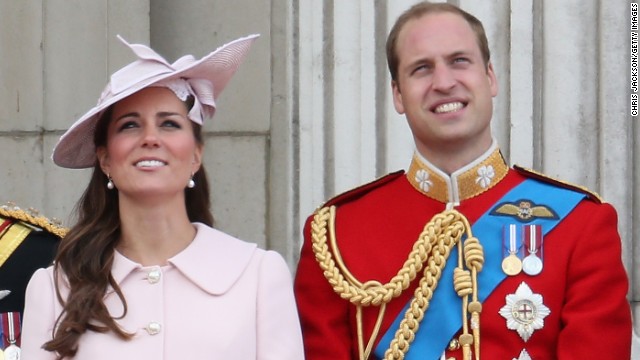
London (CNN) -- Royal watchers eagerly await the arrival of a child who will be heir to the British throne. Here's what you need to know and the latest developments:
• The appearance of a couple looking very like William and Catherine outside the hospital where she is expected to give birth provided a moment of excitement -- but it was a stunt organized by The Sun, Britain's best-selling tabloid newspaper.
• As the wait for the royal baby continues, so does the debate over the Duchess of Cambridge's actual due date. Britain's Telegraph newspaper reports Friday, citing "well-placed sources," that medical staff at St. Mary's Hospital -- where Catherine is expected to give birth -- were told the due date was July 19.
• A royal source told CNN that her due date was July 13. She and Prince William announced at the start of the year that the baby was due in July, but did not announce the date.
Why are some babies overdue?
• The Duchess of Cambridge is expected to give birth in the private Lindo Wing of St. Mary's Hospital, next to Paddington Station in London. It's where William was born, as was his brother Harry. Catherine's mother, Carole Middleton, is likely to be on hand at the hospital.
• Could the world's media be camped outside the wrong hospital, though? The Telegraph reported that a contingency plan is in place for Catherine to give birth at the Royal Berkshire Hospital in Reading, if she goes into labor while staying at her parents' home in Berkshire, and its swift progress means the journey back to London is impractical.
• There's no doubting the media interest in the royal birth.The Sun newspaper is streaming live video of the entrance to the Lindo Wing, as is Stylist magazine. The days-long vigil outside the hospital has also inspired a spew of #GreatKateWait tweets from the waiting media pack -- as rounded up by New York Magazine.
• One person who won't be at the Lindo Wing is Home Secretary Theresa May. Asked by a fellow lawmaker whether she would be attending the royal birth, as was formerly customary, she replied: "In fact, it is no longer the case that the home secretary is required to attend a royal birth. The tradition -- now defunct -- goes back many centuries, she said, explaining that "the home secretary had to be there to evidence that it was genuinely a royal birth and that a baby hadn't been smuggled in."
• Some people are thinking further ahead already. An Ipsos Mori poll released Thursday revealed almost two-thirds of those surveyed think William and Catherine's child should have a normal job before taking on royal duties. One in five disagrees. However, 70% of those polled think that it is impossible for the children of royalty to have a normal upbringing. The same survey found support for Britain's monarchy remains high, with more than three-quarters in favor of a monarchy over a republic.
• There's been plenty of speculation about the baby's name -- and betting is going strong. The famous Battersea Dogs and Cats Home in London, which takes in and finds homes for lost and unwanted pets, has gone a step further and named a litter of kittens after the bookies' favorites: Alexandra, Charlotte, Elizabeth, Victoria, Grace, James and George.
• Queen Elizabeth II is among those keen for the new baby to greet the world. On a visit to northern England on Wednesday, she was asked by a little girl whether she wants her great-grandchild to be a boy or a girl. The queen replied: "I don't think I mind. I would very much like it to arrive. I'm going on holiday."
• Prince Charles' wife, Camilla, the Duchess of Cornwall, said Monday that the family was on tenterhooks for the baby's arrival -- and suggested it could be very soon. "We're all waiting at the end of a telephone," she said, in an exchange filmed by ITV. "I hope by the end of the week, he or she will be there."
• The baby will have the title His or Her Royal Highness Prince or Princess (the baby's name) of Cambridge, St. James's Palace said this month. However, it could be as long as 10 days before the baby's name is announced.
• Anyone born in Britain on the same day as William and Catherine's baby will receive a special coin from the Royal Mint: a silver penny, dated 2013, that will come in a blue pouch for a boy or a pink one for a girl.
• The first indication that the royal baby is on its way will be an announcement in the media that the duchess has been admitted to the hospital in the early stages of labor, royal sources tell CNN. The next public announcement is expected to be that of the birth. It will be made in the form of a formal bulletin, signed by medical staff and rushed in a car with a police escort to Buckingham Palace. There, the notice will be placed in a gilt frame positioned on an easel -- the same one used to announce William's birth -- and placed in the palace forecourt for all to see.
• The first to know about the royal baby will be Queen Elizabeth II, Prime Minister David Cameron and the governors general of each of the commonwealth nations, along with the rest of the royal and Middleton families. If the baby arrives in the middle of the night, it's unlikely the queen will be awoken, so there is a chance in that instance that an official announcement will not be made until the following morning.
• Celebratory gun salutes will be sounded by the King's Troop Royal Horse Artillery in Green Park (41 rounds) and the Honorable Artillery Company at the Tower of London (62 rounds) after the baby is born.
• William and Catherine did not want to know the sex of their baby beforehand, royal sources say. There has been speculation it is a girl, however, especially after a member of the public said in March that the duchess almost uttered "daughter" while at a public event in Grimsby. The woman said the duchess was given a teddy bear and replied, "Thank you, I will take that for my d--" but then stopped herself.
• The baby will be third in line to the throne after Prince Charles and Prince William, regardless of gender. A rule change in 2011 ended centuries of male primogeniture, which decreed that the crown passed to the eldest son and was bestowed on a daughter only when there were no sons. It means that if the next royal baby is a girl, she will eventually become queen; previously, a younger male sibling would have taken precedence.
• The queen's cousin, Margaret Rhodes, told CNN's Christiane Amanpour she hoped the child would have a normal childhood. "I imagine and hope that its early life, until it's at least in its teens, will be just a jolly, happy, ordinary child's life," she said.
• It's not known where the Duke and Duchess of Cambridge plan to spend the days and weeks following the birth. William is expected to be given the usual paternity leave of two weeks by the Ministry of Defence, royal sources say. He will then return to his job as a helicopter search and rescue pilot.
• The revelation that Catherine was pregnant came after she was admitted to a London hospital in December for acute morning sickness.

Dubai -- Norwegian interior designer Marte Deborah Dalelv has spoken out after being handed a 16-month prison sentence in Dubai -- after she went to police to report she had been raped by a colleague.
The 24-year-old was convicted and sentenced on charges of having unlawful sex, making a false statement and illegal consumption of alcohol.
Her story is dominating the headlines in Norway, and has raised serious questions over the way women who allege sexual assault are treated in the United Arab Emirates.
Dalelv, who had been working at an interior design firm in Qatar since September 2011, told CNN on Saturday how a work trip to Dubai in March with three colleagues turned into a nightmare.
She said she had been out at a bar with her colleagues and friends, and asked a male colleague to walk her to her room when they returned at 3 a.m. to the hotel. She'd asked him to escort her because the hotel was large and confusing, and she didn't want to be wandering on her own, knowing she'd been drinking, she said.
When they reached a room, she realized it wasn't hers -- but the man then pulled her inside despite her vocal objections, according to Dalelv.
"He dragged me by my purse in, so I thought, 'OK, I just need to calm the situation down. I will finish my bottle of water, I will sit here and then I will excuse myself and say I feel fine,'" she said.
That was pretty much the last thing she said she remembers before the alleged sexual assault. "I woke up with my clothes off, sleeping on my belly, and he was raping me. I tried to get off, I tried to get him off, but he pushed me back down."
After someone knocked -- the hotel wake-up call -- she managed to get dressed and make it downstairs to the hotel reception, Dalelv said. "I called the police. That is what you do. We are trained on that from when we are very young," she said.
Some 10 or 12 male police officers arrived, but no female police officers were present, she said. Statements were taken from both Dalelv and the alleged rapist.
She was then taken to Bur Dubai police station, she said.
After again giving her version of events to officers, Dalelv said, "They asked me, 'Are you sure you called the police because you just didn't like it?' I said, 'Well of course I didn't like it.' That is when I knew, I don't think they are going to believe me at all."
Dalelv says she was taken for an intimate medical exam and tested for alcohol consumption. Her belongings were taken and she was kept in jail for four days, she said, with no explanation as to why.
Dubai police and UAE government officials have not responded to repeated CNN requests for comment.
Dalelv said she managed to call her parents on the third day to tell them she had been raped and ask them to contact the Norwegian Embassy. A day later, a representative from the Norwegian consulate came to the police station and she was released -- but her passport was not returned.
A piece of paper with Arabic text was handed to her, she said. An Arabic speaker told her it listed two charges against her: one for sex outside of marriage and the other for public consumption of alcohol. Both are violations of the law in the United Arab Emirates.
It was the first time she was made aware that she faced charges, Dalelv said.
She was allowed out on bail and has been staying since at the Norwegian Seaman's Center in Dubai.
Subsequently, she said her manager advised her to tell the police it was voluntary sexual intercourse and likely the whole issue would just go away. She followed the advice and in one of the many hearings at the public prosecutor's office, she made a statement saying it was voluntary.
Dalelv was then charged with making a false statement.
"That was my biggest regret because it wasn't voluntary. I just thought it would all go away," she told CNN.
But a representative of Al Mana Interiors, who Dalelv worked for, told CNN that she was not advised by her manager to say the sex was consensual but rather by a police officer, who told her that in Arabic and it was translated into English by her manager.
Dalelv said a month after the rape, while forced to stay in Dubai as the case wound through the legal system, she was fired.
The representative, who declined to be publicly identified, said Dalelv and the Sudanese man she accused -- who is married with three children -- have both been terminated by Al Mana Interiors for "drinking alcohol at a staff conference that resulted in trouble with the police."
A statement released late Saturday by Al Mana Interiors spokesman Hani El Korek said the company was sympathetic to Dalelv "during this very difficult situation." It also said that company representatives were by her side through the initial investigation, spending "days at both the police station and the prosecutor's office to help win her release."
"Only when Ms. Dalelv declined to have positive and constructive discussions about her employment status, and ceased communication with her employer, was the company forced to end our relationship with her," the statement said.
"The decision had nothing to do with the rape allegation, and unfortunately neither Ms. Dalelv nor her attorneys have chosen to contact the company to discuss her employment status."
The company is owned by Qatari billionaire Wissam Al Mana, who made headlines earlier this year after it was revealed that he has secretly married singer Janet Jackson in 2012.
Dalelv was convicted Tuesday on all three charges and was sentenced to one year in jail for having unlawful sex, three months in jail for making a false statement and one month for illegal consumption of alcohol.
CNN could not immediately confirm what happened to the alleged perpetrator, who was charged with public intoxication and having sex outside of marriage.
Dalelv is scheduled to appear at the court on September 5 to begin the appeal proceedings. Dalelv, who is not allowed to leave the UAE pending the appeal, said her lawyers have instructed her to be prepared to go back into jail while they submit a request for bail while the appeal is ongoing.
As a rule, CNN does not identify victims of sexual assault, but Dalelv went public with her story.
A Facebook page has been set up calling for Dalelv's release, as well as a petition urging the Norwegian government to take action on her behalf.
Her conviction may risk wider diplomatic repercussions.
Norwegian Foreign Affairs Minister Espen Barth Eide called his UAE counterpart, Sheikh Abdullah Bin Zayed al-Nahyan, on Friday night to protest Dalelv's sentencing, a statement from the Norwegian ministry said.
"I emphasized that we believe that the conviction is contrary to fundamental human rights, including conventions that the UAE have officially ratified," Eide is quoted as saying.
"Norway will continue to do what we can to support her in what is a very difficult situation. Our cooperation with the UAE is strong and good, but I conveyed to my colleague that we are worried that this difficult case may disturb our good relations if we do not reach a good solution in the near future."
Dalelv told CNN she received a call from Eide on Friday reiterating Norway's support.
While Dubai has a reputation as a cosmopolitan city that boasts Western influences, where visitors can drink at bars and restaurants and unmarried couples can share hotel rooms, the country adheres to Islamic laws and traditions.
The United Arab Emirates has been heavily criticized by rights groups, which say it condones sexual violence against women. Human Rights Watch has called its record "shameful," saying it must change the way it handles such cases.
In December 2012, a British woman reported being raped by three men in Dubai. She was found guilty of drinking alcohol without a license and fined.
In January 2010, a British woman told authorities she was raped by an employee at a Dubai hotel. She was charged with public intoxication and having sex outside of marriage.
An Australian woman reported in 2008 that she was drugged and gang-raped. She was convicted of having sex outside marriage and drinking alcohol, and she was sentenced to 11 months in prison.

In Masrakh, an impoverished village in India's northeastern Bihar state -- scenes of trauma, confusion, intense grief.
Here, at the site of the school meal poisoning incident that has claimed 23 young lives and imperiled 25 others, thousands of people mill around, stunned, hungry for information. They listen to the procession of politicians that streams into the village to pay respects and make promises. But they cannot offer what these people want most: answers as to how the government-mandated free meals, meant to nourish the community's children, could instead have cost them their lives.
India's school program: Ambitious, but far from perfect
Four burnt out police vehicles fringe the side of the road, a sign of the simmering anger felt towards authorities over the tragedy. Investigators had previously flagged issues with food safety at schools in the state, with one report in April from India's Ministry of Human Resource Development noting that school food "was kept in open and dirty ground."
A fresh grave has been dug in front of the ramshackle, solitary classroom where 120 of the village's children were enrolled -- an unambiguous sign of protest over the incident. There are many others buried nearby. Above all this, the wails of grieving families pierce the air.
Sarita Devi is inconsolable as she mourns the loss of her five-year-old daughter, Dipu. The wife of a migrant worker, Devi says her daughter had not wanted to go to school that day, and laments the fact she had even given her a paisa -- a sub-unit of India's rupee -- to attend. "Why isn't anyone bringing Dipu back?" she cries.
Mom anguishes over child poisoned by lunch: Why aren't you coming back?
Like many here, she has words of anger for the school's principal, who authorities say has absconded together with her husband, and whom they are seeking to interview. Devi's grief eventually overpowers her, and her body goes limp.
This is a poor village, in one of India's poorest states. Locals live in simple dwellings made of clay. The school is the heart of the community, meaning that scarcely a family here has not been affected. Even the school's cook, Manju Devi, lost children to the tragedy; her husband, Lal Babu Rai, told a reporter from CNN-IBN, CNN's sister network, that two had died after eating the tainted food, while another remains in hospital.
The settlement's solitary water pump is where locals say they were first alerted to the commotion following Tuesday's regular midday school meal. School children had congregated there to wash their plates after the regular daily meal of rice and potatoes. On this occasion, however, they began vomiting and collapsing.
The children were rushed to the local medical facility, but they could do nothing for them. They were transferred on to a larger hospital at Patna, Bihar's capital, some four hours' drive away.
In Patna, despite the distance, the incident is being keenly felt. The city has been rocked by violent protests over the deaths, and at Patna state government school on Friday, many children said they had been instructed by their parents not to eat any school meals, due to fears of further contamination.
They need not worry. Many NGOs who deliver the meals to the schools have stopped providing them to some schools, out of fears of a backlash. While answers on the tragedy remain scant, one thing remains clear: it will be some time before any sense of normalcy returns to Bihar.

On the first day of school, the secret to success is in the planning, not the pedagogy. How's your back-to-school planning going? Have you forgotten anything? Our checklist can help! Included: Online resources for a variety of back-to-school planning needs, including welcome letters, bulletin board ideas, and back-to-school activities.
It's official. You're a teacher! You aced all your education courses, know the subject matter backward and forward, can rattle off the names and philosophies of dozens of educational theorists, and achieved a pretty respectable score on the state certification exam. You finally have an actual job and an official class list. There's only one problem. The first day of school is drawing near and you have no idea what to do. Are you really ready to face that first terrifying day?
The secret to success in any new endeavor is planning. But for this particular endeavor, don't just plan, over plan. Don't just prepare, over prepare. Don't just write enough lessons plans to fill one class or a single day. (They never do!) Write more than enough!
When it comes to planning ahead, of course, the secret to success is in the details. Use the checklist below to help you with any details you might have overlooked in planning for your first day at school as the teacher.
PREPARE YOURSELF
Although it's not generally a good idea to clutter your classroom with framed family pictures or your collection of ceramic apples, there are a few personal items that can help you make it through the year. They include:
A diary. Take a few minutes at the end of each day to jot down your thoughts and impressions about the day's events. Was there a lesson that went particularly well, or particularly badly? Why? Did a difficult discipline problem arise? How did you handle it? What was the result? What successes did you experience? What compliments did you receive? As the year progresses, the diary will help you identify what works and what doesn't word, and it will help you find alternate strategies. It will also document your growth as a teacher, something you may not recognize otherwise. Who knows? There might even be a book in it!
A personal appointment calendar. Yes, a date book will come in handy for reminding yourself of faculty meetings, PPTs, and scheduled observations. More importantly, it can be used to document the unscheduled events that crop up during the day, and often come back to haunt you weeks later. You might think you'll never forget the day Darrell's father called to complain about your discipline policies (the first time!), or that Tamika's mother stopped in to request a speech evaluation, or what you did when Patrick bloodied Jose's nose on the playground. But you will! Jot it down immediately in your date book. And keep the date bookin, not on, your desk!
A personal survival kit. Store (out of reach of students!) a personal teacher survival kit. Include such items as a small sewing kit, safety pins, bandages, suntan lotion, change, snacks, tea bags or coffee singles, bottled water, breath mints, tissues, hand sanitizer, a spare pair of pantyhose (if appropriate!), sneakers and socks, a scarf and gloves, and any other items that will make bad days and minor catastrophes a little easier to deal with. None of those things are absolutely necessary to your success as a teacher, of course, but having them handy will make your life a lot less stressful.
A sturdy canvas bag to keep it all in.
PREPARE THE WAY
Confidence breeds competence. You'll feel a lot better about facing that first day of school if you take the time to become familiar with the school and with the people you'll be working with. Before school starts:
Familiarize yourself with the school building and grounds. Sure the principal took you on a quick tour, but how much did you absorb, or remember? Take the time before school starts to retrace your steps. Locate the bathrooms (not just the one closest to your classroom!), the gym, the cafeteria, the media center, and the nurse's office. Note where they are in relation to your classroom. Ask where resource classes are held. Find the audio-visual equipment and supply closet and ask about checkout procedures. Take notes or draw yourself a map.
Visit the school Web site. A school Web site can provide valuable information about the school and community, as well as insight into what's expected of students and teachers.
Review school policies and procedures. Ask about any procedures that are unclear. Learn the reasons for any policies that don't seem to make sense. Every school has its own history and problems. You'll be better equipped to follow policies and procedures correctly if you understand the reasoning behind them.
Make friends with the school support staff. They're the best friends a new teacher can have. Introduce, or re-introduce, yourself. Remember names. Ask about attendance and lunch count procedures, if you're not sure about them. Find out how to get an e-mail address. Make it clear you expect to make mistakes at first and that you know they might be inconvenienced. Ask how you can make their lives easier. Bring doughnuts!
Make a friend. Choose a teacher at your grade level or in a nearby classroom and ask if he or she would be available to answer questions or give friendly advice during the first few weeks of school. Let that teacher know that you're open to suggestions and eager to learn.
PREPARE YOUR CLASSROOM
Your classroom will be your home-away-from-home for the next nine months. You'll want it to reflect your personality, your educational philosophy, and your goals for your students. How do you do that? Consider some of these suggestions from veteran teachers.
Prepare bulletin boards. Most of your bulletin boards should be reserved for displaying student work. Simply cover the surfaces with butcher paper or a sturdy fabric and add a title and appropriate graphic. Depending on the grade level of your students, you might want to designate one bulletin board as a calendar board, which will remain constant throughout the year. Elementary and many middle school students also enjoy a student-of-the-week bulletin board. (To get the ball rolling, start with an autobiographical bulletin board of yourself!) For older students, consider setting aside a section of a bulletin board for posting the day's schedule, objectives, class assignments, homework, and upcoming events. Another section of the same board could hold a running assignment log and a handout folder (for students who are absent). For additional bulletin board ideas, check out the Education World articleYour Search for Bulletin Board Ideas Is Over!
Set up the room. Desks and activity centers can be arranged in a number of ways, depending on your individual teaching style. You'll find some of the most common room arrangements, along with a discussion of the advantages and disadvantages of each, atCreating an Effective Physical Classroom Environment, Teachers Helping Teachers: Classroom Management, and the Education World article Do Seating Arrangements and Assignments = Classroom Management? Assign seats, at least initially. It will help you learn students' names, establish mutual respect, and maintain classroom control.
Obtain student supplies. Depending on the grade level of your students, you may need paper, pencils, crayons, scissors, glue, construction paper, rulers, or calculators. You'll also need textbooks and possibly workbooks. Be sure to count them!
Obtain teacher supplies. You'll probably need (among other things!) pens and markers, a stapler and staples, paper clips, tape, rubber bands, a plan book, a seating chart, hall passes, and attendance and lunch forms.
Post classroom information. Post your name, room number, and the grade or class you teach, both inside the classroom and outside the classroom door. If you have a telephone in your classroom, post important school numbers next to the phone. Include the main office, the nurse's office, and the phone numbers of nearby classrooms.
Although not, strictly speaking, part of preparing your classroom, this is also a good time to:
Review lesson plans. Look over your first day's lesson plans and obtain all necessary materials.
Prepare materials for students to take home the first day. These might include emergency data cards, a school welcome letter, a calendar showing the class specials schedule and upcoming events, a syllabus, and a homework assignment.
Check books out of the school or public library. Start a habit of reading aloud to your students for a few minutes each day, whatever their grade level!
PREPARE YOUR STUDENTS' PARENTS
Establishing rapport and a cooperative working relationship with parents is essential to any teacher, but it's especially important to the first-year teacher, whose inexperience may be an issue for some parents. You can get off on the right foot with a welcome letter, sent to the parents of each student on your class list. Mail the letters a week or two before school starts. If that's not possible, send it home with students on the first day of school. You might include information about yourself, a list of supplies students will need to bring from home, a schedule of opening day activities, policies for parents' visits, phone calls, and volunteer opportunities (include a volunteer sign-up sheet!), a discussion of classroom rules and consequences, a curriculum overview or syllabus, and your school phone number and school e-mail address.
You can find a teacher welcome letter template among Education World's Back-to-School Templates, and in the Education World article Back-to-School Letters and Survival Kits Build Communication. You might want to send an introductory letter to your students too!
Be sure to have your principal, mentor teacher, or another veteran teacher check out parent or student welcome letters before you mail them. They know the community and school policies better than you do and are in a better position to evaluate whether your letter is effective and appropriate.
THE BIG DAY ARRIVES
You're as ready as you'll ever be! Now what?
- Arrive early! Give the classroom one last check. Turn on the lights and open the blinds.
- Greet students at the door. Introduce yourself and welcome them. Smile!
- As students arrive, hand them an assignment and ask them to get started immediately.
- Help students prepare their own nametags. You'll find name tag templates among Education World's Back-to-School Templates.
- Review, explain, and discuss school rules and procedures.
- Work together to develop a list of classroom rules and consequences, or provide students with a copy of your class rules.
- As you move through the day, explain and practice class routines.
- Take pictures of students at work and play. Save some for Parents' Night and for student-of-the-week bulletin boards. Use others to start a class scrapbook.
- Discuss class or individual goals and expectations. Younger students may enjoy hearing and discussing Judith Viorst's "The First Day" poem.
- Try to include an activity that provides opportunities for students to interact or problem-solve. Check out the Education World article Icebreakers: Sixteen Getting to Know You Activities.
- Congratulate yourself on a job well done!
ADDITIONAL RESOURCES FOR NEW TEACHERS
Survival Guide for New Teachers This guide from the U.S. Department of Education offers lots of stories and advice from teachers who have been there.
Works4Me Tips Library The NEA offers tips for teachers on such topics as content, teaching techniques, classroom management, technology, organization, and relationships.
The First Days of Middle School MiddleWeb provides an extensive list of links to resources for all middle school teachers.
Ideas for New Teachers and Education Students This site contains many links to valuable teaching resources, on such topics as how to write behavioral objectives, lesson planning, teaching methods, and much more!
New Teacher's Home Page About.com provides lots of resources, including articles, tools, suggested student reading lists, and more.

Educator Kathleen Modenbach reflects on the enormous influence teachers have on the kids they teach. A recent student/counselor survey suggests that using that influence can save vulnerable kids from violence. Modenbach believes that providing opportunities for student expression -- with no strings (no grades!) attached -- is the key. Included: Simple ways to encourage student expression and increase communication.
 |
A teacher friend of mine recently got a late-night phone call. A former student had committed suicide. It had been just a year since her own son's death, so she could relate to the grief. But she struggled to remember the student whom she had taught four years before. He was so quiet, and she remembered no special connection with him; yet, he had left instructions for authorities to call his parents and her.
Had she been that important to him?
As my friend told me the story, we both reflected on the tremendous influence teachers can have on the kids they teach. Often, we don't realize how important our presence is in their lives. We give of ourselves without thinking about it. Still, we often get too busy to consider the effect we have on kids -- especially the quiet ones, the struggling ones.
I remember a similar experience.
Years ago, I taught a learning disabled class. Steven (not his real name) worked hard to graduate with his class; then he joined the military. A year or so later, his mom told me Steven had killed himself while stationed in Germany. She said he would want me to know.
Thinking back on that conversation, I have to wonder: How many do we save? Can we save more? I usually hear about the success stories or the tragedies, but what about those quiet or struggling or "average" students?
A SURVEY OF KIDS, TEACHERS
After Columbine, educators brainstormed ways to reduce school violence through smaller classes and more personal contact between teachers and students. Whether students kill themselves and others in a school setting or commit suicide privately, the result is the same. The crucial question remains: How can our influence be channeled to save more kids?
On Law Day in 2001, a survey of 300 junior and senior high school students from public, charter, and private schools in New Jersey delved into the causes of student violence. Among the reasons at the top of students' lists were the lack of personal involvement and interaction with teachers and other students and the need for a release for pent-up emotions. Whether those problems came from school or home, they were trapped, waiting to explode. Other causes included low self-esteem; not knowing where to go to talk about problems in their lives; problems away from school that end up in school; and bottled-up anger, frustration, and other bad feelings.
In that same study, teachers and counselors were asked what they could do to prevent violence. Among the ideas educators expressed were encouraging students to speak their minds; giving awards to increase recognition of students' special talents and kindnesses; assigning faculty mentors; and holding self-esteem and communication classes.
ENCOURAGE EXPRESSION BY REMOVING GRADES
In addition, the survey revealed that students wanted more classes where they could express themselves in small groups. They were particularly excited about letting their feelings out by writing poetry with no strings attached -- that is, no grades!
I, for one, was not at all surprised by their "no grades" comments. My high school students love to share their original poems and take part in small-group presentations. But teachers have to loosen up on grading those activities. Make them count, but base the grades on completion of the tasks assigned; and give extra points for those who go above and beyond the average effort.
Most of my students get A's or B's on those assignments. No one gets below a C unless the assignment is not completed. I never grade poetry for grammar -- expression is the key!
The Huckleberry Finn Shadow Box assignment is another un-graded assignment I gave recently. After reading the novel, students worked in small groups to decorate a medium-size box to represent things, character elements, and themes of significance in the novel. As the students worked on the project, I dropped in on groups to talk with students about what they were doing and thinking, and what they learned. I made a special effort to draw out comments from students who were usually the quiet ones.
In those projects, and other similar ones, grading is the least important thing. Grades are high for everybody who participates. With the shadow box activity, credit was given to the student who constructed a small fishing pole or drew a picture of a significant event or wrote a poem about a character. The benefits and rewards of such projects are less on the finished product and more on the pride of participating, being included, and being heard.
In another project, my senior students dressed up like pilgrims from Chaucer'sCanterburyTales and performed skits in small groups. Those who costumed according to Chaucer's descriptions and revealed the pilgrims' lifestyle in their skits got high grades. After a class vote, I awarded extra points for the best costume and best skit.
"I WANT TO BE A TEACHER..."
Recently, I ran into a former student who told me she'd changed her college major. "I want to be a teacher just like you," she told me. Now, that's the ultimate in influence! But it doesn't stop me from thinking about those who might fall through the cracks and what I might do to help them.
Kathleen Modenbach is an English teacher in Louisiana's St. Tammany Parish Schools. She teaches at Northshore High School and writes for The Times Picayune in New Orleans.
